From intent to purchase: engineering high-conversion e-commerce journeys

From intent to purchase: engineering high-conversion e-commerce journeys
A Fireside Chat with Remo Giovanni Abbondandolo
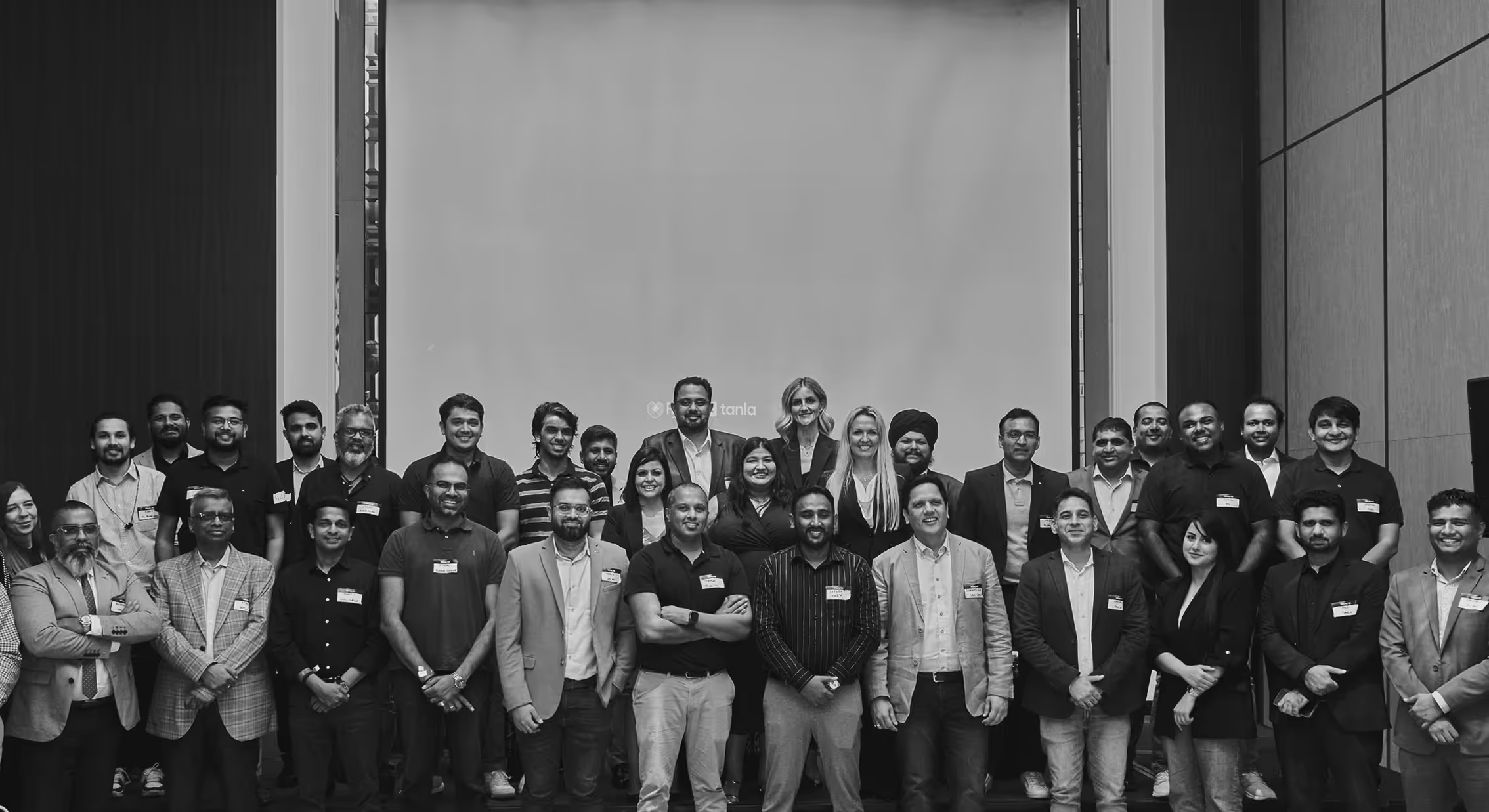
January 28, 2026 | Retail Re:Mix
In the fast-paced world of e-commerce, the checkout process often remains the most underrated yet critical touchpoint in the customer journey. At our recent Retail Re:Mix fireside chat, Remo Giovanni Abbondandolo, General Manager – MENA at Checkout.com, sat down with Dharmendra Mehta, Managing Director MEA at Fynd, to unpack how payment optimization can be the difference between conversion and cart abandonment.
The checkout moment: where intent meets reality
Dharmendra opened the conversation with a powerful analogy from his retail operations days in India. During peak sale periods with 20,000 customers flooding stores daily, the cash till wasn't just a transaction point, it was the moment of truth. The same principle applies to e-commerce today, except the stakes are higher and the abandonment easier."Everyone kind of underrates the value of the checkout process," Dharmendra noted. "When it comes to service between selection and price, I think everybody struggles with how crucial the payment provider is in connecting customer experience with business outcomes."
The hidden cost of payment friction
Remo shared a startling statistic that should make every e-commerce operator pause: 21% of customers will never return to a website where they experienced payment friction. This isn't just about lost transactions, it's about lost customer lifetime value.What causes this friction? Transaction declines top the list. As Remo explained, "There are billions of different error codes, insufficient funds, suspected fraud, network timeouts. The customer doesn't care about the technical reason. They just know it didn't work.
"The impact compounds when you consider customer acquisition costs. "Merchants spend significant amounts on meta ads, Google, TikTok to acquire customers," Remo emphasized. "When that customer reaches the payment page, where purchase intent is highest, you need to ensure the transaction completes."
The conversion funnel killer
Here's the reality: by the time a customer reaches your payment page, they've already:
- Browsed your products
- Found the right size and color
- Added items to cart
- Decided they want to purchase
The conversion funnel has done its job. Now it's the payment infrastructure's turn—and this is where many brands fail.Remo broke down the checkout optimization framework:
1. Acceptance rate optimization
Not all payment methods are created equal. "In the MENA region, you need to offer the right mix, cards, wallets like Apple Pay and Google Pay, buy now pay later, and increasingly, bank transfers," Remo explained. The key is matching payment options to customer preferences by market, not assuming one-size-fits-all.
2. Authorization intelligence
This is where technology meets business impact. Remo described how Checkout.com uses machine learning to understand why transactions decline and optimize authorization rates. "We look at historical data, issuer patterns, time of day, transaction amounts, hundreds of variables to increase the likelihood of approval."The goal? Turning soft declines into approvals through intelligent retry logic and network token usage.
3. Fraud prevention without friction
The paradox of e-commerce: you need strong fraud prevention, but excessive friction kills conversion. "Every additional field you ask customers to fill creates drop-off," Remo warned. "The art is implementing 3DS authentication only when necessary, based on risk scoring."
The MENA playbook: local payments matter
One of the most valuable insights from the conversation was the importance of local payment methods in driving conversion. Remo highlighted how Checkout.com works with local players like KNET in Kuwait, benefit in Bahrain, and Mada in Saudi Arabia.
"These local schemes have higher authorization rates and lower fees," he explained. "But more importantly, they're what customers trust and prefer to use."The data backs this up: transactions through local payment methods often see 15-20% higher conversion rates compared to international cards alone.
The future: from AI-Powered optimization to agentic commerce
When the conversation turned to emerging trends, two themes dominated:
Embedded payments and network tokenization
"We're seeing the rise of embedded checkout experiences, one-click purchases, digital wallets that store credentials securely," Remo noted. "Network tokens from Visa and Mastercard are game-changers because they eliminate the need to update card details when cards expire or get reissued."This translates to fewer failed subscription renewals and better authorization rates on recurring payments.
Agentic commerce and the payment dilemma
Perhaps the most thought-provoking discussion centered on the future of agentic commerce, AI agents shopping on behalf of humans."The human component will not disappear," Remo predicted. "I think people will still decide where they want to go on holiday. But agents will help with search and compare, finding the best flights within your parameters, the best hotel that matches your preferences."But this raises critical questions:
- Who authenticates the transaction, the agent or the human?
- Who performs KYC on the agent?
- If the agent makes a mistake (buying an 8,000 dirham item instead of 800), who handles the chargeback?
- What's the liability structure?
"There's a lot of open questions," Remo acknowledged. "We're working with Visa, Mastercard, OpenAI, Google, and others to figure out the protocols. The ecosystem is not ready yet, but we're laying the groundwork."
The infrastructure play: beyond B2C
An often-overlooked opportunity is B2B payments. Remo highlighted how travel agencies are increasingly using cards to pay suppliers instead of bank transfers."It's about reconciliation, reducing chargebacks, and solving the inefficiency of bank transfers, especially on weekends," he explained.Looking ahead, Remo sees stable coins enabling instant B2B payouts across borders, a vision that could transform working capital management for global businesses.
Key takeaways for retail leaders
From this rich conversation, several actionable insights emerged:
1. Treat checkout as a revenue driver, not just infrastructure Every percentage point improvement in authorization rates flows directly to the bottom line.
2. Localize payment options by market What works in the UAE won't necessarily work in Saudi Arabia or Egypt. Offer local payment methods your customers trust.
3. Optimize for mobile-first experiences With mobile commerce dominating in MENA, ensure your checkout is seamless on smaller screens with one-tap payment options.
4. Balance fraud prevention with friction reduction Use intelligent risk scoring to apply authentication selectively, not universally.
5. Invest in payment infrastructure partnerships Your payment provider should be more than a transaction processor, they should be a strategic partner in conversion optimization.
The pace of innovation
As Dharmendra reflected at the end of the conversation: "We did a podcast some months ago. My questions are still the same, but the answers are completely changed. That's the pace at which innovation is happening.
"In an era where customer acquisition costs continue to climb and competition intensifies, the checkout experience has evolved from a back-office function to a critical competitive advantage. Brands that understand this, and partner with payment providers who can deliver on acceptance rates, fraud prevention, and seamless experiences, will be the ones that turn intent into purchase at scale.
Re:Mix Reads