When four industries collide: What happens when retail stops playing it safe?
The conversation that revealed Saudi Arabia's retail secret
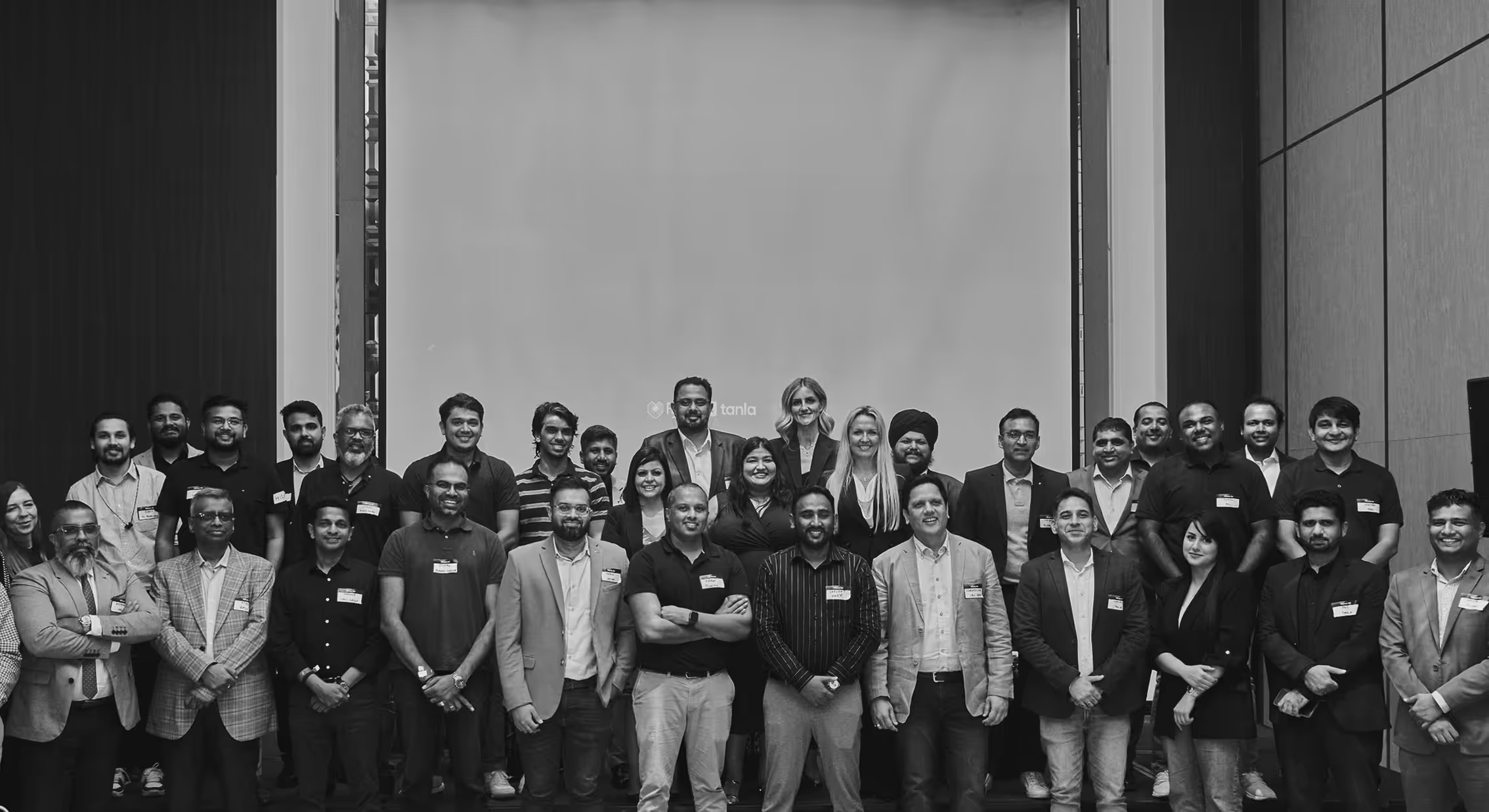
At Retail Re:Mix Riyadh (powered by Fynd and Netcore Cloud) we put four people in a room who shouldn't have that much in common.
A coffee chain IT head. An electronics e-commerce director. A healthcare group's digital lead. A pharmacy's senior commerce manager.Different industries. Different challenges. Different customer bases.
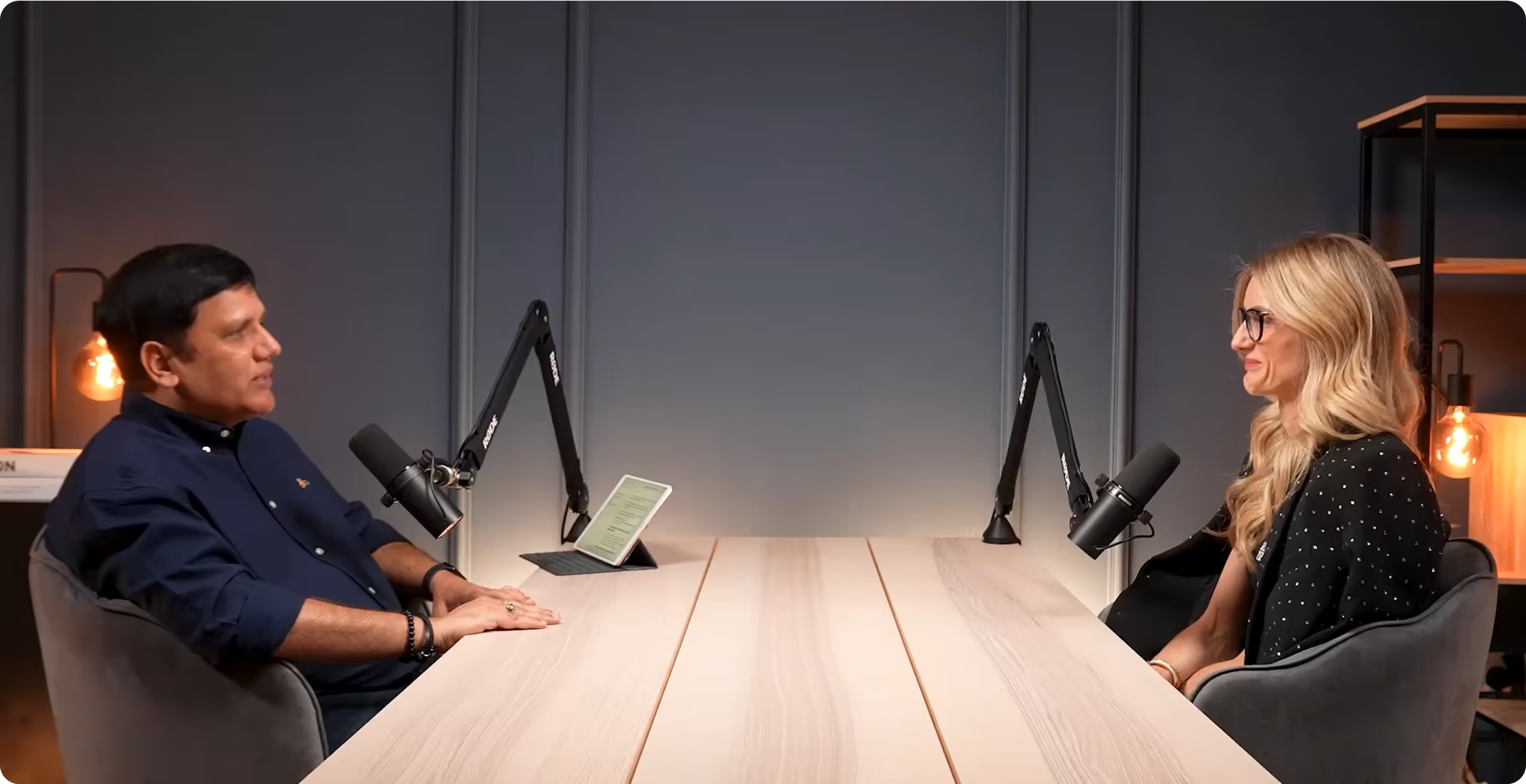
But when Mohamed Abdelmoaty (LG Electronics), Faisal Parkar (Tim Hortons – Middle East), Faten Assiri (Saudi German Health), and Mohamed Salah (Al-Dawaa Pharmacies) started talking—moderated by Ananth Kishore from Netcore Cloud—something unexpected emerged.They're all solving the same problem. And they're all solving it now.
The invisible standard that's killing slow brands
Here's what nobody says out loud: your customers don't compare you to your competitors anymore. They compare you to the best experience they had today.
Ordered lunch in 20 minutes? Your two-day shipping feels broken. Coffee ready before you walked in? Your checkout line feels like punishment. Prescription delivered same-hour? Your "allow 3-5 business days" feels like 1998.
Faten Assiri from Saudi German Health put it plainly: "E-commerce is evolving toward immediacy, where every order is near-instant."
This is a healthcare executive. Five years ago, "fast" in healthcare meant 24-hour turnaround. Now she's competing with delivery apps, and patients—sorry, customers—don't care about the complexity behind the scenes. They care that their last app experience was seamless, and yours isn't.
The bar isn't set by your industry anymore. It's set by every experience that came before yours today.
The unified commerce breakthrough (or: how to make channels disappear)
Faisal Parkar runs IT for Tim Hortons across the Middle East. His team's job isn't to build an app, or run stores, or manage loyalty. It's to make all of that feel like one thing."Unified commerce is no longer a vision; it's here and happening."
Here's what that actually looks like: Order ahead on mobile. Walk into any location. Pick up your order. Points accrue automatically. Redeem them without friction. Switch between channels without thinking about it.The breakthrough isn't the technology—it's the realization that customers don't see "channels." They see a brand that either works smoothly or doesn't. When the seams disappear, something interesting happens: loyalty stops being about points and starts being about eliminating annoyance.
You don't come back for rewards. You come back because your brain has learned this place doesn't waste your time.That's unified commerce doing its job—becoming so invisible that customers forget it exists.
Speed, rewards, and the tightening loop
Mohamed Abdelmoaty from LG Electronics described something that's happening across categories: the compression of desire into satisfaction."Quick commerce and instant rewards are creating new in-store engagement loops."
Think about the old model: See product. Consider it. Maybe buy it. Wait days for delivery. Maybe get a promotional email later.New model: See product. Buy it. Get it in 30-60 minutes. Receive instant incentive with delivery. Feel the dopamine hit. Remember that feeling.
The cycle tightens. The gap between "I want" and "I have" shrinks so much that your brain stays in the brand's orbit. You don't move on to the next thing because you're still riding the high of the last thing.
This isn't just about speed—though 30-minute electronics delivery still feels wild. It's about designing experiences where the reward is built into the transaction, not bolted on afterwards. When it works, you're not building a loyalty program. You're building a habit.
The AI you don't see (but absolutely feel)
Mohamed Salah from Al-Dawaa Pharmacies deals with a category where mistakes aren't just annoying—they're dangerous. Stock-outs can mean missed medications. Delivery delays can mean health complications."AI and machine learning are redefining last-mile delivery efficiency in healthcare."
His team uses AI to predict what customers need before they order. Routes optimize in real-time. Inventory adjusts based on refill cycles, seasonal patterns, and neighborhood health data. Recommendations get personalized without feeling invasive.
When it works—and it works—customers don't see any of it. They just experience a pharmacy that always has what they need and delivers when promised.
Here's the pattern across all four panelists: the best technology is invisible technology. AI isn't impressive when you see it. It's impressive when you don't see it, but everything just... works.Predictive inventory. Optimized routes. Personalized experiences. Seamless channel switching. Instant fulfillment. None of it feels like "AI" or "machine learning" to the customer. It just feels like a brand that gets it.
The human element nobody wants to talk about
Strip away the buzzwords and here's what every person on that panel actually said: technology is table stakes. The differentiator is designing for humans who are impatient, distracted, and drowning in options.
Whether someone's grabbing coffee, ordering a phone, booking a health appointment, or refilling a prescription—the expectation is identical. Easy. Fast. Personal. Connected.
Speed without empathy is aggressive. Personalization without privacy is creepy. Efficiency without warmth is sterile. Technology without humanity is just expensive automation.
The brands winning in Saudi Arabia right now aren't winning because they have the most advanced systems. They're winning because they've figured out how to make sophisticated technology feel effortless.The magic isn't in the system. It's in making the system disappear so all the customer experiences is: "That was easy."
What's actually happening in Saudi Retail (and why it matters EVERYWHERE)
Here's the pattern that emerged across coffee, electronics, healthcare, and pharma: The convergence is real.
Different industries are adopting the same strategies—unified commerce, AI-driven personalization, rapid fulfillment, instant gratification loops. The tactics might vary, but the destination is the same: remove friction, add value, stay relevant.
"Traditional" is dead. Healthcare and pharma—sectors built on physical presence—are setting digital benchmarks. If they can move this fast, nobody gets to hide behind "but our industry is different."The baseline is rising. Quick commerce started with food. Now it's electronics, prescriptions, and everything in between. Unified commerce used to be a 2025 goal. Now it's baseline 2024.
AI personalization was a roadmap item. Now it's running in production.The winners are connecting systems to outcomes. Not tech for tech's sake. Not AI because it's cool. But: does this reduce friction? Does this add value? Does this create a moment worth remembering?
The uncomfortable truth
If you're reading this from outside the Kingdom and thinking "interesting, but not applicable," you're missing what's happening.
What's playing out in Saudi Arabia is what happens when a market decides to skip the middle steps. No legacy systems to untangle. No decades of "this is how we've always done it" to navigate. Just: what do customers want, and how fast can we deliver it?AI-powered personalization? Live in production. Unified commerce? Baseline expectation. Sub-hour delivery? Expanding beyond food. Instant rewards? Built into the experience.
While other markets are testing these concepts in pilot programs, Saudi retailers are scaling them across categories.
And here's the thing about leapfrogging: once a market sets a new baseline, it doesn't roll back. Customers don't un-learn convenience. They don't forget what seamless feels like.
The real lesson
The future of retail isn't about any single tactic—not quick commerce, not AI, not unified systems. It's about the convergence of all of them into experiences that feel simultaneously fast, personal, and effortless.It's about understanding that customers don't see your internal org chart. They see a brand that either delivers on the promise or doesn't.
It's about building technology sophisticated enough to handle complexity, but invisible enough that customers never think about it.
Bottom line: The retailers thriving in Riyadh aren't the ones with the biggest budgets or the fanciest tech stacks. They're the ones who figured out that innovation isn't about doing one thing brilliantly, it's about connecting everything seamlessly.And if your market isn't there yet? It will be. Sooner than you think.
Re:Mix Reads